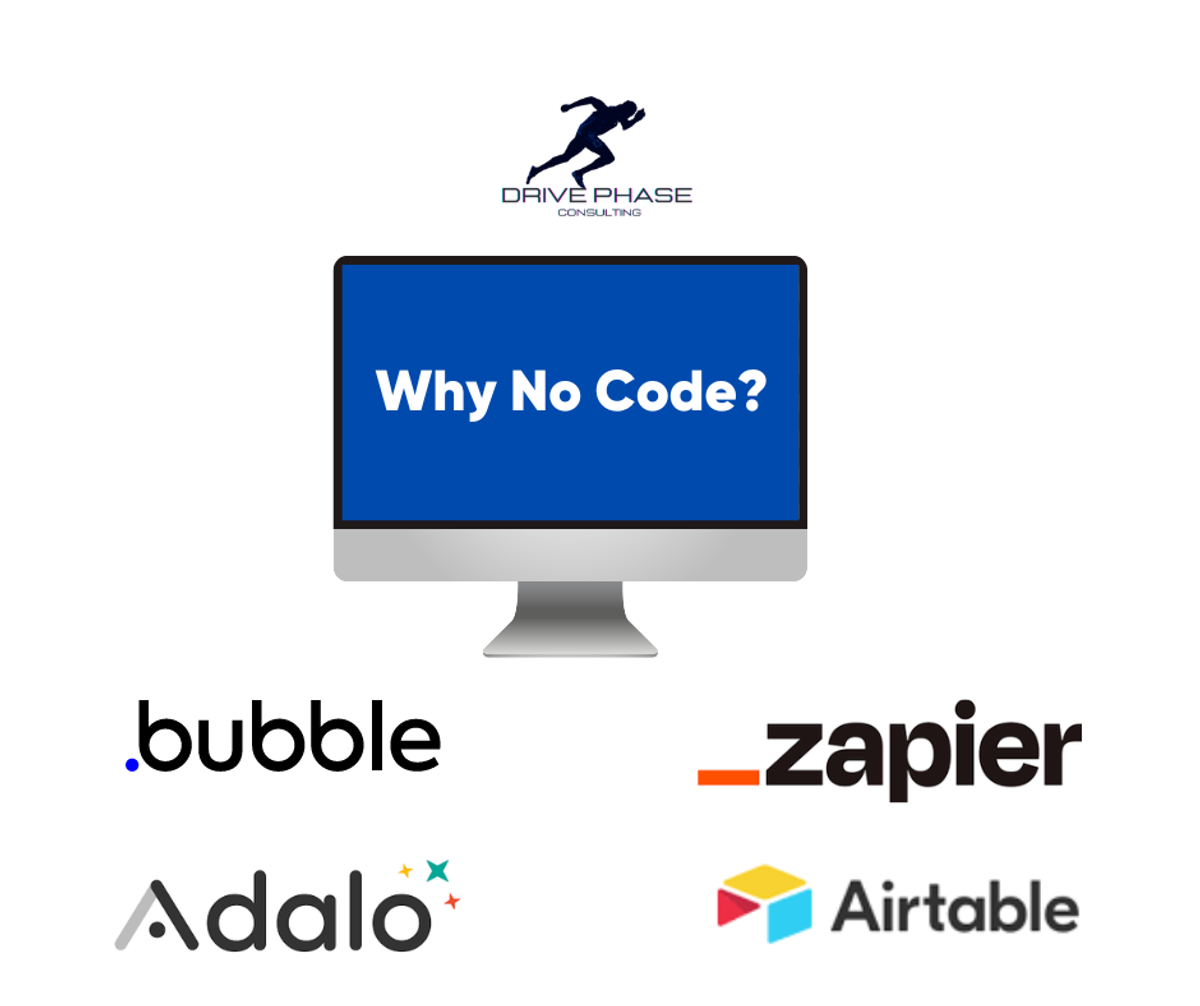
Creating computer applications used to be something that most people didn't understand. Only a select number of people understood the strange language of computer code that powers software not too long ago. As a result, coders were expensive and creating custom applications were as well. With the advent of tools that didn't require coding to create software like Bubble.io, Adalo, Airtable, Zapier, creating software has democratized technology. However, as we are learning, no code is still a tool that many outside the technology world know very little about. That is shame because many of the people that don't know about no code are the ones that stand to gain the most from it.
What are the true benefits of no code? There are many. We will cover just a few here.
1. It's faster...and therefore, cheaper
This is by far the most important reason why no code is so valuable. Technology changes so quickly that being able to get a technology tool into the market fast is a tremendous advantage. How much faster is it? By a lot of people's estimate, it's about 10x faster to build an equivalent application in no code as it takes in code. Since the most expensive part of building an application is usually the coder, that means building in no code is roughly 10% the cost. That is massive.
2. End users can now become builders
Because coding was such a specialized skill, there weren't many people that could do it. The problem with that was the people building technology often didn't understand the problems that they were solving and usually weren't users of the product themselves. No code is a much easier skillset to learn so a more diverse group of people can learn to build with it. That closes the gap between the users and builders of technology significantly. Theoretically, that should lead to better tools being built.
3. Projects can be built iteratively
Because in the past, coded projects took so long to plan out and were difficult to build, it was very challenging and expensive to make changes to projects in the middle of the project. What was planned was what was built. Because no code projects can be done so much quicker, they can be built in a much iterative manner. In other words, what is called a minimal viable product (or MVP) can be built very quickly and cheaply. This is a application with a bare minimum feature set. Once the product is built, users can use the application and see how it performs in the real world. They can give meaningful feedback on what changes would be helpful. This process can be repeated over and over again until a robust product has been built. Building a product this way in code is extremely painstaking and expensive. In no code, this is very straightforward way to build a product. As a result, a better application can be built in less time and at a lower cost.
What Are the Drawbacks of No Code
Generally speaking, if there is a tremendous amount of data being handled, speed can be an issue with some no code applications. There are ways to address this. However, even in the worst case where you have to build something in code eventually, you will saved significant time and money because you will know exactly what you need to build. Your no code application becomes your very detailed wireframes. There are some industries, such as healthcare which may require their technology to be HIPAA compliant, where the available tools are more limited because of these specialized needs. However, the majority of small business owners will not be affected by these limitations.
Growth Engine Score
Find out where your business is losing momentum
The Growth Engine Score is a paid diagnostic that maps all three layers of your business and shows you exactly what to fix first.
Get Your Growth Engine Score →